
Showing posts with label Math. Show all posts
Showing posts with label Math. Show all posts

Telling Time by Half-Hour and Quarter-Hour
K to 12 Mathematics
Philippine Basic Education
Content: Measurement
Content Standards: The learner demonstrates understanding of the concepts of time and measures and compares objects using direct comparison and non-standard units of length, mass and capacity.
Performance Standards: The learner is able to give different measures of time.
Learning Competencies: The learner tells the time by an hour, half-hour and quarter-hour.
What time do you go to bed?
Lina goes to bed at this time:

Can you tell what time she goes to bed at night?
More Exercises in Rounding Numbers
In rounding numbers, it's important to know the place values.
The place value of each digit in the number 7, 035, 943, 579:

How to round numbers?
1.Keep the number you are rounding if it is followed by 4, 3, 2, 1, or 0 and rewrite the rest of the digits as zero.
Example:
Round 631 to the nearest hundreds.
The number in hundreds place is 6. The number in the tens place is 3, which is the nearest number to 6. We keep number 6, then rewrite 3 and 1 to 0 and 0. 631 becomes 600.
2.Add one to the number you are rounding if it is followed by 5, 6, 7, 8, or 9 and rewrite the rest of the digits as zero.
Round 1, 586, 584 to the nearest millions.
The number next to the millions place is five. Add 1 to 1 and rewrite the rest of the digits as zero.
2, 000, 000
More examples...

More exercises....
I. Round to the nearest hundred thousand.
- 9,678,494 = _______________________
- 9,920,108 = _______________________
- 3,481,224 = _______________________
- 2,370,396 = _______________________
- 8,133,428 = _______________________
- 6,907,446 = _______________________
- 1,857,720 = _______________________
- 2,139,569 = _______________________
- 6,234,444 = _______________________
- 9,812,476 = _______________________
- 4,515,022 = _______________________
- 2,161,182 = _______________________
- 3,603,470 = _______________________
- 5,085,951 = _______________________
- 6,362,435 = _______________________
- 2,247,234 = _______________________
- 4,112,016 = _______________________
- 1,180,505 = _______________________
- 1,562,377 = _______________________
- 6,381,498 = _______________________
II. Round to the nearest ten thousand.
- 678,494 = _______________________
- 9,920,108 = _______________________
- 481,224 = _______________________
- 370,396 = _______________________
- 8,133,428 = _______________________
- 907,446 = _______________________
- 857,720 = _______________________
- 139,569 = _______________________
- 6,234,444 = _______________________
- 212,476 = _______________________
- 515,022 = _______________________
- 2,161,182 = _______________________
- 3,603,470 = _______________________
- 185,951 = _______________________
- 6,362,435 = _______________________
- 247,234 = _______________________
- 4,112,016 = _______________________
- 1,180,505 = _______________________
- 1,562,377 = _______________________
- 6,381,498= _______________________
Recognizing Patterns and Some Exercises

Identifying patterns is one of the things that young children need to learn.
Every child can develop this skills by constant practice and exploration of patterns that can be found everywhere.
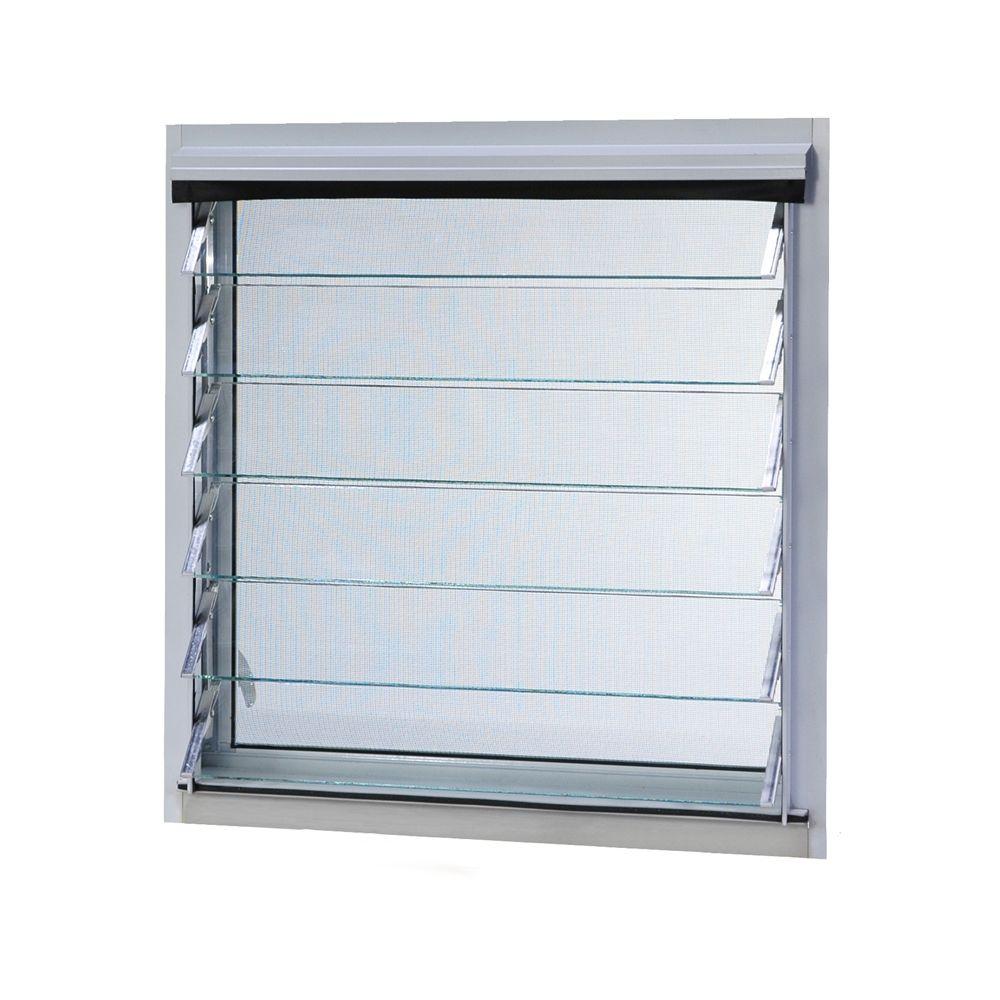
At home, the window panes in a window frame are arranged in a repeated way as shown in the picture.

Source: Home Depot
In school, the iron rails make a pattern.

The government building has repeating columns that makes a pattern.

Source: Shankaronline
Patterns are everywhere.
To know which one is next in a pattern, the child needs to observe the repeating things. How are things being repeated?
For example, the shapes are arranged in this manner: heart, diamond, heart, diamond.

What is next?
The next is heart.
Some exercises that children can do to practice their skill in identifying the next things in a pattern.

II. Write the next three numbers in the pattern.
1. 1 8 1 8 1 8 1 8 ____________
2. 0 1 0 1 0 1 0 1 0 1 ____________
3. 6 7 6 7 6 7 6 7 ____________
4. 1 2 3 1 2 3 1 2 3 ____________
5. 3 6 9 3 6 9 3 6 9 ____________
Free Worksheet! Identifying the Next Objects or Numbers in a Pattern
Identify the Values and Place Values of 3-digit Numbers
How do you read this number?
327
This number has 3 digits.
Each digit has its own place that show its value.
Let us take for example the number above. Seven is in ones place and its value is 7.

The tens place shows groups of tens. In the number 327, 2 is in the tens place. Its value is 2 tens or 20.

Three is in hundreds place and its value is 300. Also, the digit 3 shows there 3 groups of hundreds in the number 327.

Can you tell the value and place of 8 in these numbers?
Identifying the Fraction of a Group
Target: I can identify the fraction of a part in a group.
Do you like doughnuts? What flavor of doughnuts do you like? Why?
Today you are going to learn how to identify the fraction of a part in a group.
Read the question.

Do you like doughnuts? What flavor of doughnuts do you like? Why?
Today you are going to learn how to identify the fraction of a part in a group.
Read the question.
What fraction of the doughnuts have strawberry frosting?

To find out the answer, we have to identify the two parts of a fraction: numerator and denominator.
Recognizing Fractions
Target: I can identify the fraction of a part in a whole.
A fraction is a part of a whole.

It also shows the proportion of a part, the numerator, to the number, the denominator, by which the whole is divided.
numerator
denominator
The circle above is divided into four parts.
The colored part is only 1. The fraction of the colored part is
The colored part is only 1. The fraction of the colored part is
Comparing Dissimilar Fractions with Similar Numerators
In comparing fractions with similar numerators, we take notice of their denominators. The smaller the denominator, the bigger the value.


Look at the fractions below.

1/2 is bigger than 1/3.
How about these fractions? Which is bigger? Write >, < or = in the blank.
1. 1/2 _____ 1/4
2. 1/7 _____ 1/3
3. 1/5 _____ 1/5
4. 1/9 _____ 1/6
5. 1/5 _____ 1/2
6. 1/2 _____ 1/4
7. 1/3 _____ 1/3
8. 1/6 _____ 1/4
9. 1/3 _____ 1/9
10.1/8_____ 1/7
More Exercises:
I. Encircle the bigger fraction.
2. 1/9 1/4
3. 1/3 1/5
4. 1/8 1/7
5. 1/4 1/2
II. Box the smaller fraction
2. 1/8 1/9
3. 1/2 1/6
4. 1/5 1/3
5. 1/3 1/6
Write a fraction in a blank that makes the comparison true.
2. 1/8 > ______
3. 1/4 < ______
4. 1/6 > ______
5. 1/3 < ______
The Basics of Division of Numbers
When the total number of objects is shared equally into groups, it is being divided. This process is called division. It is the opposite of multiplication and repeated subtraction.
8 ÷ 2= 4
Repeated subtraction:
8-2=6
6-2=4
4-2=2
2-2=0
How many times 2 is subtracted from differences? 4 times
8 ÷ 2=4
Multiplication sentence: 4 x 2=8
Division sentence: 8 ÷ 2=4
Terms to Remember:
dividend =total number of objects to be divided
divisor = the number of groups that is used to divide the dividend.
quotient = the number of objects in each group. The answer to the division
I. Read each problem and write your answer in the space provided.
- If you divide 20 lollipops among your 5 friends, how many lollipops will each friend has?
- If you have 10 doughnuts and you are going to give 2 doughnuts to each of your sister, how many sisters will receive equal number of doughnuts?
- There are 12 pebbles. If you put 6 pebbles in a box, how many boxes are needed?
- Mrs. Robinson made 27 ribbons for her 3 children. How many ribbons will each child get?
- Lisa will plant 4 sunflower seeds in a pot. If there are 16 sunflower seeds, how many pots will she need?
- In a class there were 30 students. The teacher divided the class into 5 groups. How many groups were made?
- I have 50 pesos. I will buy 5 strips of ribbons. How much does each strip cost?
- If there are 18 cans of milk, how many shelves are needed if each shelf will have equal number of cans of milk?
- The family gathered 21 watermelons in their small garden. A basket could hold 7 watermelons. How many baskets were used?
- A group of children divided the marbles among themselves. If there were 40 marbles and each person could get 8 marbles, how many children were there in the group?
Grade 2 Math Challenge Parallel Questions- Tell How Many Ones, Tens, Hundreds, Thousands, and Ten Thousands a Number Has

Direction: Read the questions carefully and write your answers in the blanks.
1. How many ones are there in 490? ______________
2. How many ones are there in 1,038? _____________
3. How many ones are there in 72,034? _____________
4. How many tens are there in 5,900? _____________
5. How many tens are there in 468,600? _____________
6. How many tens are there in 97,490? _____________
7. How many hundreds are there in 30,000? _____________
8. How many hundreds are there in 61,300? _____________
9. How many hundreds are there in 484,200? _____________
10.How many thousands are there in 37,000? _____________
11.How many thousands are there in 1,000? _____________
12.How many thousands are there in 59,000? _____________
13.How many ten thousands are there in 380,000? _____________
14.How many ten thousands are there in 500,000? _____________
15. How many hundred thousands are there in 900,000? _____________
Grade 2 Math Challenge Parallel Questions- Write an Expanded Form of a Number into a Standard Form

Exercises.
A. Direction: Read the questions carefully and write your answers in the blanks.
1.What is 8 x 10,000 + 9 x 1,000 + 1 x 100 + 2 x 10 + 3 written in standard form ?____________
2.What is 5 x 1,000 + 7 x 100 + 3 x 10 + 7 written in standard form ?____________
3.What is 9 x 10,000 + 4 x 1,000 + 2 x 100 + 7 x 10 written in standard form ?____________
4.What is 3 x 10,000 + 7 x 1,000 + 5 x 100 + 6 x 10 + 2 written in standard form ?____________
5.What is 7 x 10,000 + 8 x 100 + 8 x 10 + 8 written in standard form ?____________
6.What is 1 x 10,000 + 9 x 1,000 + 3 x 100 + 5 x 10 + 3 written in standard form ?____________
7.What is 6x 1,000 + 5 x 100 + 3 x 10 + 4 written in standard form ?____________
8.What is 2 x 10,000 + 4 x 1,000 + 6 x 100 + 9 written in standard form ?____________
9.What is 8 x 10,000 + 3 x 1,000 + 2 x 100 + 1 x 10 + 4 written in standard form ?____________
10.What is 4 x 10,000 + 1 x 1,000 + 3 x 100 + 4 x 10 + 7 written in standard form ?____________
11.What is 7 x 1,000 + 8 x 100 + 3 x 10 + 3 written in standard form ?____________
12.What is 1 x 10,000 + 1 x 1,000 + 9 x 10 + 9 written in standard form ?____________
13.What is 5 x 10,000 + 8 x 1,000 + 3x 100 + 5 x 10 + 6 written in standard form ?____________
14.What is 9 x 10,000 + 2 x 1,000 + 2 x 100 + 3 x 10 + 8 written in standard form ?____________
15. What is 9 x 1,000 + 2 x 100 + 7 x 10 + 9 written in standard form ?____________
Grade 2 Math Challenge Parallel Questions- Identify the Value of a Digit in a Number
Question: What is the value of 7 in 979,243?
Answer: 70, 000 or 7 ten thousands
A. Direction: Read the questions carefully and write your answers in the blanks.
1.What is the value of 9 in 82,901?___________________
2.What is the value of 1 in 130,663?___________________
3.What is the value of 8 in 198,400?___________________
4.What is the value of 7 in 369,870?___________________
5.What is the value of 5 in 848,589?___________________
6.What is the value of 3 in 7,438?___________________
7.What is the value of 9 in 945,627?___________________
8.What is the value of 2 in 138,325?___________________
9.What is the value of 6 in 28,246?___________________
What is the value of 1 in 421?___________________Grade 2 Math Challenge Parallel Questions- Identify the Place Value of a Digit in a Number
A. Direction: Read the questions carefully and write your answers in the blanks.
1.What is the place value of the underlined digit in 979,243? ___________________
2.What is the place value of the underlined digit in 455,032? ___________________
3.What is the place value of the underlined digit in 63,086? ____________________
4.What is the place value of the underlined digit in 1,887? ____________________
5.What is the place value of the underlined digit in 783,513? ____________________
6.What is the place value of the underlined digit in 143,322? ____________________
7.What is the place value of the underlined digit in 5,067? ____________________
8.What is the place value of the underlined digit in 257,592? ____________________
9.What is the place value of the underlined digit in 433,203? ____________________
10.What is the place value of the underlined digit in 108? ____________________
11.What is the place value of the underlined digit in 486,394? ____________________
12.What is the place value of the underlined digit in 36,885? ____________________
13.What is the place value of the underlined digit in 21,359? ____________________
14.What is the place value of the underlined digit in 106,376? ____________________
15.What is the place value of the underlined digit in 524,123? ____________________
Math Challenge Parallel Questions
Math is not actually difficult. It is just a matter of practicing one's Mathematical skills. Constant practice and review of Math lessons are important for a child to develop his or her ability to answer not only basic Mathematical problems but also challenging problems.
In the Philippines, Metrobank Foundation Inc, Mathematics Teachers Association of the Philippines (MTAP) , and the Department of Education (DepEd) collaborated to organize Metrobank-MTAP-DepEd Math Challenge (MMC) every year.
I was able to teach several students who are MTAP contestants when I was still teaching at a school. Simply, I was an MTAP trainer before.
I have been having this underlying thought that every Filipino child can do challenging Math problems. How? By constant practice. One of the ways to do this is to give the student a set of questions targeting one skill. For example, in identifying the place value of a digit in a number, I would give ten different questions asking the student to just identify the place value of a digit. Repetition is a mother of skill, as the famous American businessman and authoer Anthony Robbins said.
There are so many ways to train students. I wish to include my way of doing it.
In this MTAP series, questions patterned after the common Math Challenge questions are posted.
Subscribe to:
Posts (Atom)